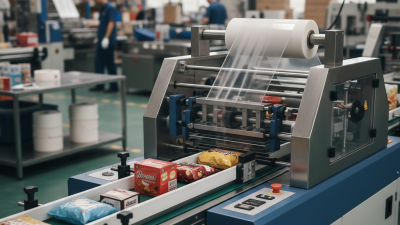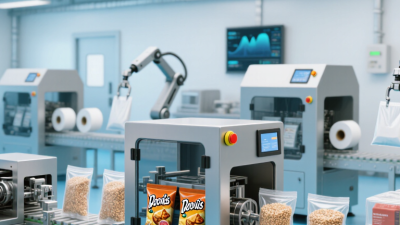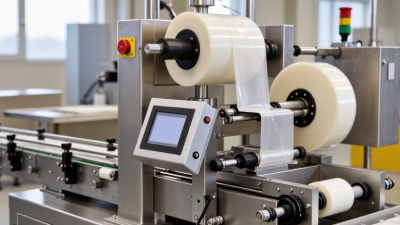
Choosing a China top horizontal packaging machine supplier requires more than comparing online prices. Buyers should examine engineering experience, machine stability, and after-sales support. A reliable supplier understands how film tension, sealing temperature, and product spacing affect daily production.
This guide introduces the key points for evaluating a horizontal packaging machine manufacturer in China. It considers factory capabilities, customization experience, testing procedures, and export service. Practical details matter. Ask to see a running machine, not only product photographs. Watch the sealing jaws, conveyor movement, and touchscreen response during continuous operation.
Small details reveal quality.
A professional supplier should provide clear specifications, material options, electrical standards, and maintenance instructions. References from similar industries can also strengthen confidence. However, impressive certificates do not always guarantee smooth performance. Buyers should verify documents, inspect sample packaging, and request realistic speed data. A factory producing snack, bakery, medical, or household packaging may require different feeding systems and sealing designs.
No supplier fits every project.
This article will compare the qualities that distinguish dependable Chinese manufacturers from less suitable options. It will also discuss installation training, spare-parts availability, remote assistance, and long-term operating costs. Some recommendations may change after testing different products or materials. That limitation deserves attention. Careful evaluation, transparent communication, and documented trials remain the safest path toward selecting a capable partner.
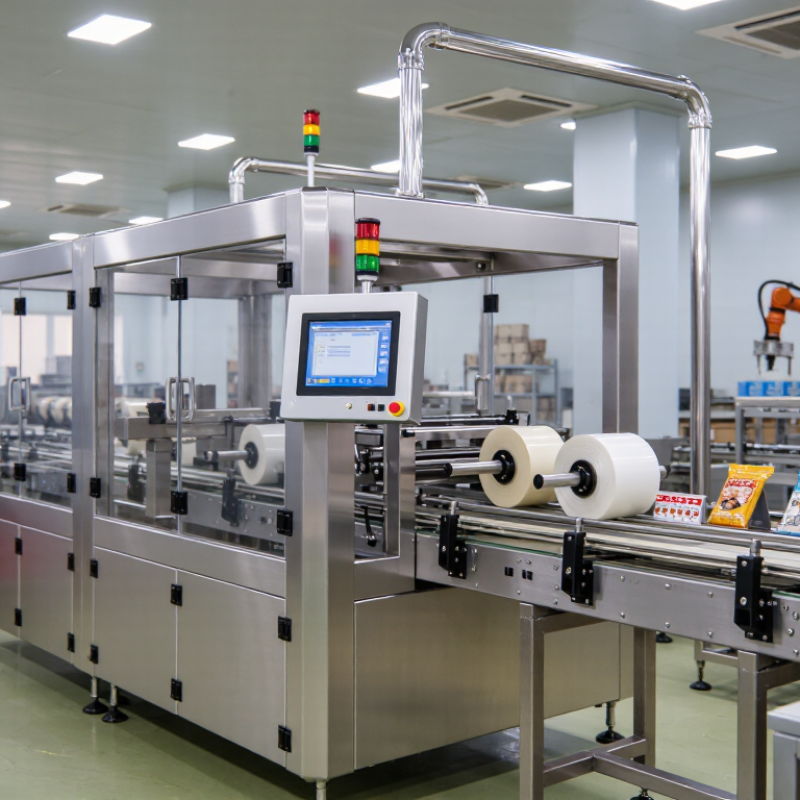
Horizontal packaging machines form, fill, and seal products through a continuous film path. Common types include flow wrappers, pillow-pack machines, and horizontal form-fill-seal systems. They handle bakery items, household goods, medical packaging, and many other permitted products. Their functions include film feeding, product spacing, sealing, cutting, date coding, and automatic rejection.
Typical speeds reach 40 to 120 packs per minute, depending on product shape, film quality, and seal design. A stable line often runs below its advertised maximum. That is normal. PMMI’s 2023 State of the Industry report recorded U.S. packaging machinery shipments of about 10.2 billion dollars in 2022, showing continued investment in automated packaging equipment. However, output alone does not prove machine value. Seal consistency, changeover time, and operator access matter more during long production shifts. In practical testing, irregular products can reduce speed sharply.
Tips: Ask suppliers for a factory acceptance test using your actual product and film. Check pack quality at the planned speed, not only at maximum speed. Measure waste, setup time, and unplanned stops. The Packaging Machinery Manufacturers Institute also emphasizes workforce efficiency and equipment integration as major industry concerns. A machine may look impressive. The details decide performance.
China Top Horizontal Packaging Machine Supplier?
China’s packaging machinery market is expanding with food, beverage, pharmaceutical, and household product demand. Mordor Intelligence estimates the market at about USD 10.5 billion in 2024, with steady growth expected through 2029. The figures vary by research method. That matters.
China’s National Bureau of Statistics reported continued growth in food manufacturing output during 2024. This supports demand for horizontal flow wrappers, pouch systems, and automated case packing equipment. PMMI’s 2024 industry research also highlights labor shortages, smart maintenance, and flexible production as major investment drivers. A machine now needs more than speed. It must handle frequent product changes, uneven packaging materials, and limited floor space.
A practical supplier review should examine sealing consistency, film waste, changeover time, and service response. Interact Analysis identifies automation and digital monitoring as important packaging machinery trends in 2024. Buyers can request recorded tests using their actual product sizes. Small details matter, such as film tracking after eight hours or seal quality near the conveyor edge. Cheap equipment can look attractive.
But the lowest quote may hide integration costs. Chinese manufacturers offer broad customization, yet technical documentation is not always equally clear. Independent factory audits, acceptance tests, spare-parts lists, and operator training deserve attention before signing. Data alone cannot select the best horizontal packaging machine supplier. A reliable decision needs measurable trials and honest questions.
China Top Horizontal Packaging Machine Supplier?
Choosing a supplier requires more than comparing catalog speeds. Ask for output data from a machine running your product, film, and target pack size. A claimed rate may fall during changeovers, sealing adjustments, or frequent product feeding. Request a sustained production test, including uptime, reject rate, and changeover time. Watch the finished packs closely. Weak seals and uneven cutting reveal problems quickly.
Accuracy depends on stable film tracking, temperature control, sensor response, and servo coordination. Automation should reduce labor without creating difficult maintenance. Check recipe storage, alarm clarity, remote diagnostics, and integration with upstream equipment. Ask operators to perform routine adjustments during a trial. Their experience often exposes usability issues that technical brochures hide. I have found that simple controls can outperform complicated systems when production staff change regularly. This is not always obvious.
Tips: Require written test conditions, sample packs, spare-parts recommendations, and training details. For CE compliance, request the EU Declaration of Conformity, risk assessment, technical documentation, and relevant test records. A CE mark alone is not reliable evidence. Confirm that the documents match the exact machine configuration and applicable requirements. Review guarding, emergency stops, electrical safety, and labeling in person. Do not accept vague promises. One weakness remains: factory tests may not reproduce every shift condition, so keep a small validation period before full production.
| Evaluation Dimension | Typical Industrial Benchmark | Recommended Acceptance Target | Evidence to Request from the Supplier | On-Site or Factory Test Method | Suggested Weight |
|---|---|---|---|---|---|
| Production Output | 40–200 packs/min for many horizontal flow-wrapping applications. | Rated speed should meet the required output with the actual product, film, sealing format, and operator conditions. | Machine datasheet, speed range, product-size limits, sample test video, and a written output guarantee. | Run the buyer’s product continuously for at least 30–60 minutes and record good packs per minute, stoppages, and rejects. | 20% |
| Speed Stability | Nominal maximum speed is normally higher than sustainable production speed. | Continuous production speed should remain within 90–95% of the agreed target during the acceptance test. | Factory Acceptance Test protocol, production-speed records, and declared limitations related to product shape or film. | Measure average good output over multiple test intervals instead of relying on the highest instantaneous speed. | 10% |
| Pack-Length Accuracy | Servo-controlled film feeding commonly supports approximately ±1–2 mm repeatability under stable conditions. | Define a tolerance suitable for the product, artwork registration, and downstream requirements; use a written tolerance in the purchase contract. | Servo motor specifications, encoder details, registration-control description, and sample measurement records. | Measure at least 30 consecutive packs using a calibrated ruler or digital measuring device and calculate the average deviation. | 15% |
| Seal Quality | Seal performance is affected by film structure, temperature, pressure, dwell time, contamination, and product position. | No open seals, burn-through, excessive wrinkles, or product damage at the agreed operating speed and temperature window. | Film compatibility statement, sealing-temperature range, seal-jaw design, and sample-pack inspection report. | Inspect visual seal quality and perform peel, leak, or burst testing according to the product’s packaging requirements. | 15% |
| Waste and Reject Rate | Waste varies widely with film setup, changeovers, product alignment, and operator skill. | Set a product-specific target; a stable run should normally demonstrate low single-digit reject rates or better after setup. | Reject definition, start-up waste estimate, film-waste data, and records from a comparable application. | Count good packs, defective packs, and start-up film waste separately during a controlled production trial. | 10% |
| Automation Level | Common functions include PLC control, HMI recipes, servo feeding, photoelectric detection, automatic film tracking, and alarm history. | Required functions should be demonstrated using the buyer’s products rather than listed only as optional features. | Automation architecture, PLC/HMI model information, I/O list, recipe-management screenshots, alarm list, and communication interfaces. | Verify recipe recall, parameter protection, fault alarms, sensor response, product changeover, and restart behavior. | 15% |
| Changeover and Usability | Changeover time depends on product dimensions, tooling, film width, and the number of adjustable stations. | Supplier should provide a documented changeover procedure and a target time for the buyer’s product range. | Changeover checklist, adjustment drawings, tooling list, operator manual, and training plan. | Time a trained operator changing between two agreed product formats and verify that the first acceptable pack is produced correctly. | 10% |
| Machine Safety | Industrial packaging machinery should include guarding, emergency stops, interlocks, warning labels, and electrical protection appropriate to its design. | All identified hazards should be assessed and controlled before shipment; safety functions must operate correctly during inspection. | Risk assessment, safety-circuit description, guard and interlock list, emergency-stop test record, and electrical drawings. | Check every access door, interlock, emergency stop, moving part, hot surface, sharp edge, and restart condition. | 10% |
| CE Compliance | For machinery placed on the European Economic Area market, the manufacturer or responsible economic operator must complete the applicable conformity process. | CE marking must be supported by an EU Declaration of Conformity, technical documentation, risk assessment, and applicable standards—not by a logo alone. | EU Declaration of Conformity, technical file index, risk assessment, user instructions, electrical drawings, and applicable harmonised-standard references. | Verify that the machine nameplate, declaration, manuals, safety functions, and actual machine configuration are consistent. | Mandatory Gate |
| Documentation and Traceability | Professional suppliers normally provide manuals, wiring diagrams, spare-parts lists, inspection records, and serial-number traceability. | Documents should be complete, version-controlled, delivered in the required language, and matched to the supplied machine. | Operation and maintenance manuals, parts list, software backup, calibration records, inspection checklist, and revision history. | Compare document revision numbers with machine labels, installed components, HMI screens, and electrical-cabinet contents. | 5% |
| After-Sales Support | Support commonly includes remote troubleshooting, spare-parts supply, installation guidance, and operator training. | Agree response times, spare-parts availability, warranty scope, remote-access method, and escalation contacts before purchase. | Warranty terms, service-level agreement, recommended spare-parts list, training agenda, and preventive-maintenance schedule. | Request a simulated fault diagnosis and confirm the supplier’s ability to provide manuals, parts information, and technical assistance. | 5% |
Evaluation rule: Select a supplier only after the required output, pack accuracy, seal quality, safety functions, documentation, and CE conformity evidence have been verified on the actual machine configuration. CE compliance is a legal conformity process, not a universal guarantee of machine performance or product quality.
China Top Horizontal Packaging Machine Supplier?
A capable Chinese supplier should prove more than attractive machine photos. Servo control is a practical starting point. Independent servo axes can improve film registration, cutting accuracy, and product spacing. Operators should see these settings on a clear interface. Useful alarms matter too. During factory testing, request records for speed, reject rate, and changeover time. A machine that runs well for ten minutes may still struggle during a full shift.
Modified atmosphere packaging requires careful engineering. Gas mixing, sealing pressure, and residual oxygen control must work together. The supplier should explain sensor accuracy and provide repeatable test results. Ask for samples using your actual product, tray, and target gas ratio. Small leaks can appear after transport or temperature changes. That detail is often underestimated.
Film compatibility also separates experienced suppliers from ordinary fabricators. A horizontal machine may handle PE, PP, laminates, and selected recyclable films, but not with identical settings. Film thickness, stiffness, slip, and heat-seal temperature affect performance. Servo control cannot correct every material problem. In practical evaluations, technicians should test several film reels and record jaw temperature, tension, and seal strength. One weakness remains: laboratory results may not match humid production floors. Clear manuals, spare-parts planning, training, and responsive technical support make that risk easier to manage.
Approximate melting-point ranges of common packaging-film polymers used in horizontal flow-pack and MAP applications
These reference values show why film compatibility is important when selecting a horizontal packaging machine. Servo-controlled sealing and film transport systems can support accurate registration and stable sealing, while MAP configurations must be matched with the film’s gas-barrier structure. Actual sealing temperatures depend on film thickness, multilayer construction, coating, dwell time, and production speed.
Choosing a top horizontal packaging machine supplier requires more than comparing the machine price. Calculate the total cost, including tooling, spare parts, shipping, customs, installation, and operator training. A low quotation may exclude format change parts or commissioning support. That omission can become expensive after delivery.
Ask for a written production schedule with design approval, factory testing, packing, and shipment dates. Confirm whether the lead time starts after receiving the deposit or final artwork. Request a factory acceptance test using your actual product and film. A realistic supplier should explain possible delays, especially when imported electrical components are involved. Warranty terms must state coverage, response time, and exclusions. Check whether remote diagnosis is included and whether technicians can provide paid onsite service. Spare parts should have clear prices and delivery times. Do not accept vague promises.
Tips: Compare three landed-cost quotations, not three machine prices. Ask for sample packs, noise measurements, cycle speed, and sealing results. Keep every technical promise in the contract. A practical weakness is often overlooked: operators may need several days to master film alignment and changeovers. Plan training time. Also, warranty value depends on actual response speed. One year of coverage is not enough if technical replies arrive after a week. Ask who will answer during production problems, and test the support channel before purchasing.

© Copyright 2025 | All Rights Reserved