Why Choose a Thermoformer Machine for Packaging?
Why Choose a Thermoformer Machine for Packaging?
Packaging decisions often look simple from a distance. A thermoformer machine heats plastic sheet, shapes it over a tool, and trims the finished package. In practice, each stage affects product protection, cycle speed, material use, and operating cost. As J. L. Throne, a respected thermoforming researcher, explains, “Thermoforming is the process of heating a thermoplastic sheet to a temperature at which it can be formed.” This definition sounds straightforward. The engineering is not.
A well-selected thermoformer machine can produce trays, blister packs, medical packaging, and food containers with consistent dimensions. It can also support attractive surfaces, controlled sealing areas, and efficient material handling. Experienced operators watch more than the final shape. They monitor heating zones, forming pressure, plug-assist timing, cooling, trimming, and tool maintenance. Small temperature changes can create thin corners or uneven walls.
The benefits are real.
However, this technology is not automatically the best choice. Tooling costs, startup waste, labor skill, and material compatibility require honest evaluation. A machine may run quickly but perform poorly with complex geometries. A lower purchase price may hide expensive changeovers. That deserves reflection.
This article examines why manufacturers choose thermoforming for packaging. It considers production flexibility, repeatability, sustainability concerns, and total ownership cost. Reliable decisions should come from trials, measured cycle data, and the actual packaging requirement—not attractive sales claims alone.
What Is a Thermoformer Machine?
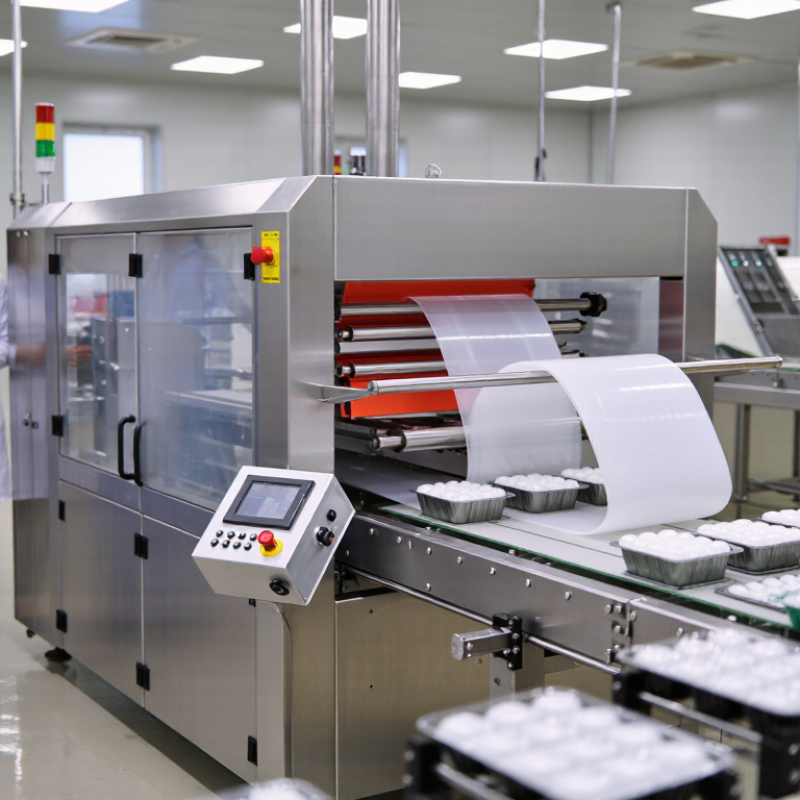
A thermoformer machine is packaging equipment that heats a plastic sheet until it becomes flexible. A forming tool then shapes the softened material around a cavity, tray, or product outline. After cooling, the machine trims the formed pack and separates usable pieces. Some systems also seal a lidding film over the tray. That is the basic idea.
In a production line, the sheet moves through heating zones before reaching the forming station. Temperature, pressure, and vacuum must stay balanced. Too much heat can thin corners, while too little can create sharp, incomplete shapes. Operators inspect sample packs for wall thickness, seal quality, edge cleanliness, and product fit. This hands-on check often reveals problems that a screen does not show. Different molds support formats such as food trays, medical packs, and protective inserts. Materials like PET and PP may be selected according to product needs and recycling targets.
Thermoforming can reduce material use and produce consistent shapes at useful speeds. It can also support custom dimensions without redesigning an entire packaging line. However, it is not a magic solution. Tool costs, trimming waste, heat control, and changeover time require careful evaluation. The first setup is rarely perfect. During line trials, small adjustments may improve forming pressure or reduce uneven edges. A poorly matched machine can create waste quickly, especially with complex shapes. The right choice depends on production volume, pack geometry, material goals, and quality controls.
Why Choose a Thermoformer Machine for Packaging? - What Is a Thermoformer Machine?
| Data Dimension | Typical Information | Packaging Relevance |
|---|---|---|
| Definition | A thermoformer is a packaging machine that heats a plastic sheet or film until it becomes pliable, forms it over or into a mold, and then cools it to create a shaped package. | Suitable for producing trays, cups, containers, blister packs, and other rigid or semi-rigid plastic packaging. |
| Basic Process | Sheet feeding → heating → forming → cooling → trimming or punching → stacking or discharge. | A continuous sequence can reduce manual handling and support repeatable production. |
| Common Materials | PET, rPET, PP, PS, HIPS, PVC, PLA, and other thermoplastic sheets or films, subject to machine and application compatibility. | Material selection can affect clarity, rigidity, barrier performance, recyclability, sealing, and food-contact suitability. |
| Typical Sheet Thickness | Approximately 0.2–2.0 mm for many packaging applications; the practical range depends on the material, mold, heating system, and forming method. | Thin films support lightweight packs, while thicker sheets provide greater rigidity and protection. |
| Heating Range | Many thermoplastics are processed within an approximate sheet-heating range of 100–200°C, depending on polymer type and grade. | Accurate temperature control helps improve forming consistency and reduce warping, thinning, and material waste. |
| Forming Methods | Vacuum forming, pressure forming, matched-mold forming, and combinations of these methods. | The selected method influences detail definition, wall-thickness distribution, mold cost, and achievable package geometry. |
| Typical Package Types | Food trays, meat and produce trays, medical trays, electronics inserts, blister packs, clamshells, cups, lids, and industrial protective packaging. | One machine platform can support different products by changing molds, tooling, and operating settings. |
| Production Configuration | Available as inline sheet-fed systems, roll-fed systems, intermittent-motion machines, and continuous-motion machines. | The configuration can be matched to production volume, material format, available floor space, and automation requirements. |
| Output Potential | Production speed varies widely by package size, cavity count, material, forming depth, cooling time, and trimming method. Multi-cavity tooling can produce several packs per cycle. | Actual output should be calculated from usable cavities, cycle time, uptime, and reject rate rather than machine speed alone. |
| Automation Options | Automatic sheet or roll loading, servo-driven indexing, temperature control, in-line trimming, stacking, labeling, inspection, and data monitoring. | Automation can improve repeatability, labor efficiency, production tracking, and workplace safety. |
| Tooling Flexibility | Molds may be manufactured from materials such as aluminum, epoxy, or other tooling materials selected for the application and expected production volume. | Interchangeable tooling allows packaging designs and cavity layouts to be changed without replacing the complete machine. |
| Material Efficiency | Web and trim waste can often be collected and recycled when the polymer is suitable and local recycling infrastructure permits. | Nesting, optimized mold layouts, accurate cutting, and recycled-content materials can help reduce packaging waste. |
| Key Advantages | High design flexibility, consistent dimensions, fast tooling changes, compatibility with multiple thermoplastics, and suitability for automated production. | Thermoforming is useful when product protection, presentation, lightweight construction, or custom geometry is important. |
| Important Selection Factors | Package dimensions, forming depth, material and thickness, cavity count, cycle time, trimming method, sealing requirements, available utilities, floor space, and regulatory needs. | Evaluating these factors before purchase helps ensure that the machine matches the product, target output, quality requirements, and total operating cost. |
Note: Operating ranges and production capabilities are general industry references. Actual results depend on the selected polymer, sheet design, mold geometry, machine configuration, and process settings.
Related Posts
-
Why Invest in Thermoformer Machines at the 139th Canton Fair?
-
Why is a Thermoformer Machine Essential for Modern Manufacturing Processes?
-
Top 10 Roll Stock Machine Features Buyers Should Know?
-
Why Overwrapping Machines Are Essential for Efficient Packaging Solutions
-
How to Operate a Roll Stock Machine Effectively?
-
2026 How to Choose the Right Filling Machines for Your Business?

Products
Links
© Copyright 2025 | All Rights Reserved