Top Types of Tray Machines for Efficient Production Processes?
In today's fast-paced manufacturing landscape, the need for efficiency is paramount. A significant aspect contributing to this efficiency is the use of tray machines. According to a recent industry report, nearly 70% of companies have invested in automated tray machines to streamline their production processes. These machines enhance productivity, reduce labor costs, and minimize waste.
However, choosing the right type of tray machine is not always straightforward. The market offers various options, each with distinct advantages. Some models excel in speed, while others focus on versatility. While many companies see measurable improvements, others struggle with integration and operational challenges. Misalignment between machine capabilities and production needs often leads to dissatisfaction.
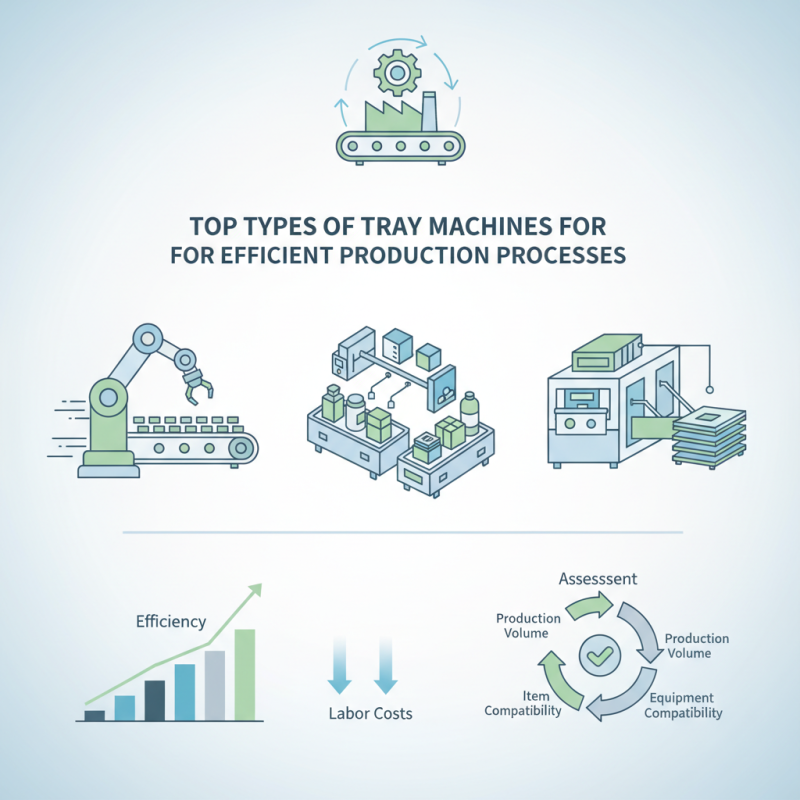
It is crucial for businesses to carefully assess their specific requirements before purchasing a tray machine. The decision should consider factors such as production volume, item size, and compatibility with existing equipment. Embracing this technology can drive efficiency but requires thoughtful integration. In an era where production efficiency defines success, investing in the right tray machine could be transformative.
Types of Tray Machines: An Overview of Their Functions and Uses
Tray machines play a crucial role in various production processes. They are vital in sectors like food packaging, electronics, and pharmaceuticals. Different types of tray machines serve unique functions to enhance efficiency. For example, thermoformers create plastic trays for food, ensuring longer shelf life. Reports indicate that the global market for tray forming machines is expected to reach $1.4 billion by 2026.
Another significant type includes automatic loading machines. These machines streamline the feeding process, resulting in reduced labor costs. A study found that companies using automation can increase production speed by up to 50%. However, the integration of such machines can be complex and may require training for effective use. Many manufacturers still struggle with this transition, indicating a gap in operational efficiency.
Consider also shrink wrapping machines. They are essential for bundling products securely. Despite their advantages, some manufacturers overlook maintenance. Neglecting this aspect can lead to downtime and lost revenue. Industry data suggests that routine maintenance can improve machine lifespan by 30%. Yet, many operators do not prioritize this, reflecting a need for better operational practices.
Key Features to Consider When Choosing Tray Machines for Production
When selecting tray machines, several key features must be considered. Speed and efficiency are crucial. A machine that can process more trays in less time boosts productivity. However, balancing speed with quality is essential. High-speed machines may compromise on various factors.
Another important feature is versatility. A machine should handle different tray sizes and types. This ensures it meets various production needs. Adaptability to new production methods or materials is vital. Production lines can change, and machines must evolve.
Maintenance and ease of use should never be overlooked. Machines that are complicated to operate may hinder workflow. It's essential to assess how often a machine needs repairs. Frequent breakdowns can disrupt production. Regular assessments can also reveal areas for improvement in machine selection.
Top Types of Tray Machines and Their Efficiency
Comparative Analysis of Manual vs. Automatic Tray Machines
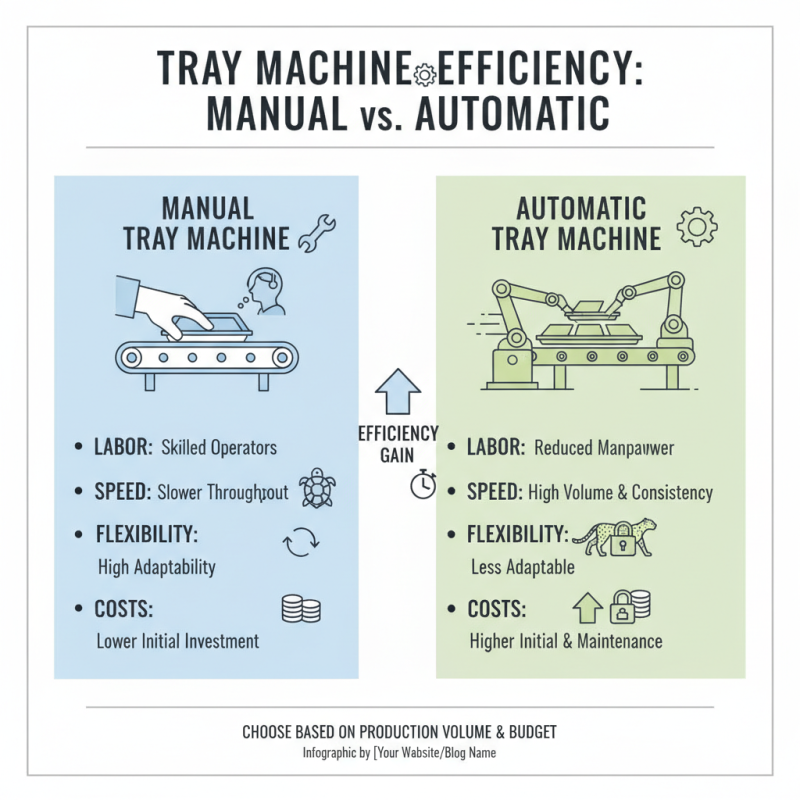
When comparing manual and automatic tray machines, efficiency is a key factor. Manual machines require skilled operators. They offer flexibility but can be slow. In contrast, automatic machines provide speed and consistency. They handle large volumes effectively, reducing labor costs. However, they may require higher initial investment and maintenance.
Tips: Always evaluate the production scale. If the demand is low, manual machines might be more feasible. Check for user-friendly features in automatic options. This can enhance operator training and minimize errors.
Another aspect to consider is the workspace. Manual machines need space for workers to move. Automatic machines require a layout that accommodates their logistics. A poorly designed space can lead to delays and increased costs. Reflecting on your production needs is crucial before making a decision.
Tips: Consult with production experts or conduct a small trial. Understand your limitations and the potential of each machine type. This will guide you toward a suitable choice for your production process.
Applications of Tray Machines Across Various Industries
Tray machines have become essential in various industries, enhancing production efficiency. They serve multiple applications, notably in food processing. According to recent industry analyses, the food sector accounts for over 40% of tray machine usage. These machines streamline processes, improving consistency in packaging and reducing manual labor.
In pharmaceutical manufacturing, tray machines play a critical role. They allow for precise handling of delicate products. A report noted that around 30% of pharmaceutical companies are investing in automation, which includes advanced tray systems. This shift helps mitigate human error and accelerates production timelines.
However, not all implementations yield optimal results. Some industries face challenges integrating these machines into existing workflows. The initial setup can be complex, requiring significant adjustments. Moreover, maintenance issues can arise, impacting production consistency. Continuous improvement and adaptation are necessary for maximizing the benefit of tray machines across industries.
Future Trends in Tray Machine Technology and Efficiency Improvements
The landscape of tray machine technology is evolving rapidly. Recent reports indicate that automation within this industry has increased efficiency by up to 30%. This surge is driven by the integration of smart technologies, enabling real-time monitoring and adjustments. Machine learning algorithms are optimizing production flows, reducing waste. Data shows that companies adopting these advancements see a notable decrease in operational costs.
However, not all companies are keeping pace with these innovations. Many still rely on outdated systems, missing out on significant potential efficiencies. The gap between those investing in cutting-edge technology and those lagging behind may widen further. Experts recommend focusing on training staff to maximize the benefits of these machines. Without proper understanding, even advanced technology cannot deliver the expected outcomes.
Looking ahead, sustainability is a key trend. Eco-friendly materials in tray machine production are gaining traction. Industry statistics reveal that 70% of consumers prefer sustainable packaging options. As the demand for sustainability rises, companies are urged to adapt quickly. This adaptation may involve rethinking their current practices and exploring novel approaches in production. Embracing these changes could lead to enhanced market competitiveness and customer loyalty.