Experience & Vision

7 Tips for Choosing the Right HFFS Machine

Flexible packaging continues to attract investment, but growth does not make every packaging line a good fit. Grand View Research’s 2024 Flexible Packaging Market analysis valued the global market at USD 269.2 billion in 2023 and projected a 4.8% compound annual growth rate from 2024 to 2030. That expansion raises practical questions for manufacturers: Which package formats are gaining demand? Can the line handle changing film structures, product sizes, and production volumes? A hffs machine can form, fill, and seal packages in a continuous horizontal process, but its performance depends on matching the equipment to the actual job.

The right choice starts with the package, not the machine brochure. A line filling small snack pouches may need different dosing accuracy and changeover speed than one packing frozen foods. Film compatibility, sealing temperature, available floor space, cleaning access, and operator training all affect day-to-day results. Small details count. Ask suppliers for trials using your product and packaging material, and compare demonstrated output with your required rate—not just the headline speed. Request clear figures for scrap, changeover time, and service response, too. PMMI’s industry research regularly examines automation, workforce, and operational pressures across packaging, useful context when evaluating support and ease of use. Still, a report cannot predict every factory’s conditions. A cramped layout or inconsistent product flow can undermine an otherwise capable system. There is no universal best machine. The following seven tips will help buyers weigh performance, flexibility, cost, and service needs before making a decision.
7 Tips for Choosing the Right HFFS Machine

Understand HFFS Machines and Their Packaging Process

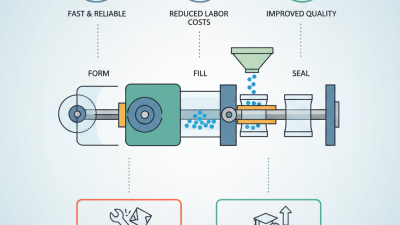
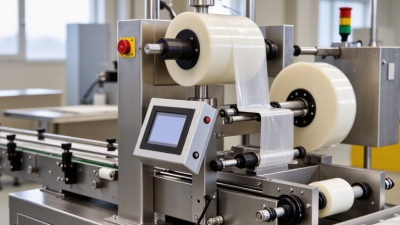
A horizontal form-fill-seal (HFFS) machine turns a flat film roll into sealed packages on a continuous line. The film unwinds, passes through guides, and wraps around a forming box. Product enters the formed tube at a controlled point. Longitudinal sealing closes the film around it, while heated jaws create end seals and cut individual packs. Simple in principle. Sensitive in practice.

Film tension, sealing temperature, jaw pressure, and timing all affect package quality. Too much heat can distort a printed film; too little may leave a weak seal. Photoelectric sensors often track registration marks so cuts align with the artwork. Operators should also check product spacing, since crowded items can become trapped in the seal area. In practice, the neat process diagram rarely shows every adjustment needed during a changeover. A setup that looks efficient on paper may waste film while settings are being tuned. Testing the actual product and packaging material helps reveal those trade-offs. Record stable settings, inspect seals and cuts, and watch for gradual drift during a run. That small discipline matters.

Define Product, Package, and Production Requirements

Before comparing horizontal form-fill-seal machines, document the product’s real behavior: flow, temperature, particle size, oiliness, and sensitivity to oxygen or moisture. A powder that bridges in a hopper needs different feeding and forming conditions from a stack of delicate bars. Small details matter. Record the actual product dimensions and weight range, not just the ideal sample. FAO’s 2023 report, The State of Food and Agriculture, estimated that 13.2% of food was lost between harvest and retail in 2021. Packaging cannot solve that loss alone, but reliable seals and suitable portion sizes can help protect product quality.

Next, define the package and production targets. Specify film structure, width, seal type, pack style, and whether the design includes a zipper, gusset, or tear notch. Then set a realistic output rate, shift pattern, changeover frequency, and acceptable reject level. A quoted speed may reflect ideal conditions, not your product, film, or operators. Ask for a trial using production materials. Measure good packs per minute, seal consistency, and waste during startup and changeovers. The UN Environment Programme’s Food Waste Index Report 2024 estimated that 1.05 billion tonnes of food were wasted in 2022 across retail, food service, and households. That is not a machine-performance metric, but it underlines why package size and product protection deserve careful testing. Some assumptions will be wrong. Recheck them before specifying the machine.

Compare Machine Speed, Flexibility, and Automation

When comparing HFFS machine speed, look beyond the maximum packs-per-minute figure. Ask for sustained output using your actual product, film, and pack size. A machine may run quickly with one format but slow down during sealing or product loading. Watch a production trial. Check seal quality, rejected packs, and how often operators need to intervene. Fast on paper is not always fast on the floor.

Flexibility matters when pack sizes or products change. Compare the available pouch widths, cut lengths, and adjustment ranges. Ask how long a changeover takes, and whether operators need special tools. Clear settings and repeatable adjustments help reduce setup errors. Small detail, big difference. Still, flexibility can be overstated; a machine that accepts many formats may need extra parts or longer setup for each one. Confirm the formats you actually plan to run.

Automation should solve a real production problem. Servo-driven controls can improve repeatability, while sensors may detect film or product faults before they create a long run of waste. Check whether alarms are easy to understand and whether the machine can share useful data with existing equipment. More automation is not automatically better. Consider your team’s training and maintenance capacity, too. I would compare these factors during a realistic trial, not rely on a specification sheet alone.

Assess Material Compatibility, Hygiene, and Maintenance

Choosing an HFFS machine starts with the film, not the sales specification. Confirm that the machine can handle your material’s thickness, stiffness, and sealing range. A multilayer film may seal well at one temperature but wrinkle or weaken at another. Run a seal trial. Check for even seals, clean cuts, and consistent pouch dimensions at your intended production speed. A short test can miss problems that appear after several hours, so test longer runs when possible.

Hygiene depends on both design and daily cleaning. Look for smooth product-contact surfaces, accessible forming areas, and minimal crevices where residue can collect. Ask how to remove guards and inspect the sealing jaws; a tool-heavy cleaning routine may be skipped under time pressure. If the product is sticky or dusty, observe a real cleaning cycle rather than relying on drawings. Small details matter.

Maintenance access affects uptime. Check whether operators can reach belts, heaters, sensors, and film guides without dismantling major assemblies. Ask which parts need routine inspection and whether replacements are straightforward to identify. Keep a written schedule for jaw cleaning, fastener checks, and sensor verification. Even a well-designed machine needs care. One detail is easy to overlook: frequent format changes can shift adjustment time from occasional to daily, so include changeovers in the evaluation.

Evaluate Suppliers, Service, and Total Cost of Ownership

When comparing HFFS suppliers, inspect service evidence, not polished promises. Ask for regional response and repair times, local spare-parts stock, technician coverage, and an escalation path. Request anonymized service records for machines running similar films and pouch formats. Check them carefully. A promised four-hour response means little if the technician is several states away.

The 2024 True Cost of Downtime report estimates that unplanned downtime costs the world’s 500 largest companies about $1.4 trillion annually, or 11% of their revenue. That figure is not a forecast for your plant, but it shows why service access deserves a place in the purchase evaluation. PMMI’s 2024 State of the Industry report puts U.S. packaging machinery shipments near $10.9 billion for 2023, reflecting a substantial equipment market where support capability can vary widely.

Compare total cost of ownership across the same operating period. Include installation, training, change parts, film waste during setup, preventive maintenance, utilities, and likely replacement components. Ask suppliers to itemize these costs and state what their warranty excludes. Then check references from plants with comparable shift patterns and changeover frequency. A low quote may still win; it just needs scrutiny. I would treat any uptime projection as an estimate, not a promise.

Go to Top