
How to Choose the Best Tray Machine for Your Business
Choosing the right tray machine can shape your production speed, product quality, and daily operating costs. A machine that looks impressive at a trade show may still struggle with your actual tray sizes, materials, or changeover demands. Begin with the product, not the brochure. Measure tray dimensions, board thickness, forming depth, and expected output. Include real samples whenever possible.
Packaging equipment consultant Elena Morris puts it clearly: “The best tray machine fits your workflow before it fits your budget.” That principle deserves attention. A reliable model should handle your normal production volume without constant adjustments. Check forming accuracy, feeding stability, sealing compatibility, and operator access. Ask how quickly one worker can change formats. Minutes saved during every changeover can become valuable hours each month.
Do not overlook service support. Confirm spare-parts availability, training, warranty coverage, and remote troubleshooting. Examine the machine’s frame, controls, guarding, and cleaning access. A compact design may save floor space, yet it can make maintenance uncomfortable. That trade-off is easy to miss. Request a factory test using your materials and target speed. Review rejected trays, noise, energy use, and setup time. Numbers matter.
The choice is rarely perfect. You may accept a slower machine for better flexibility, or pay more for stronger automation. That is where careful judgment matters. Compare total ownership costs, not only the purchase price. Speak with current users, inspect completed trays, and record every concern. A dependable tray machine should support consistent production today while leaving room for tomorrow’s products.
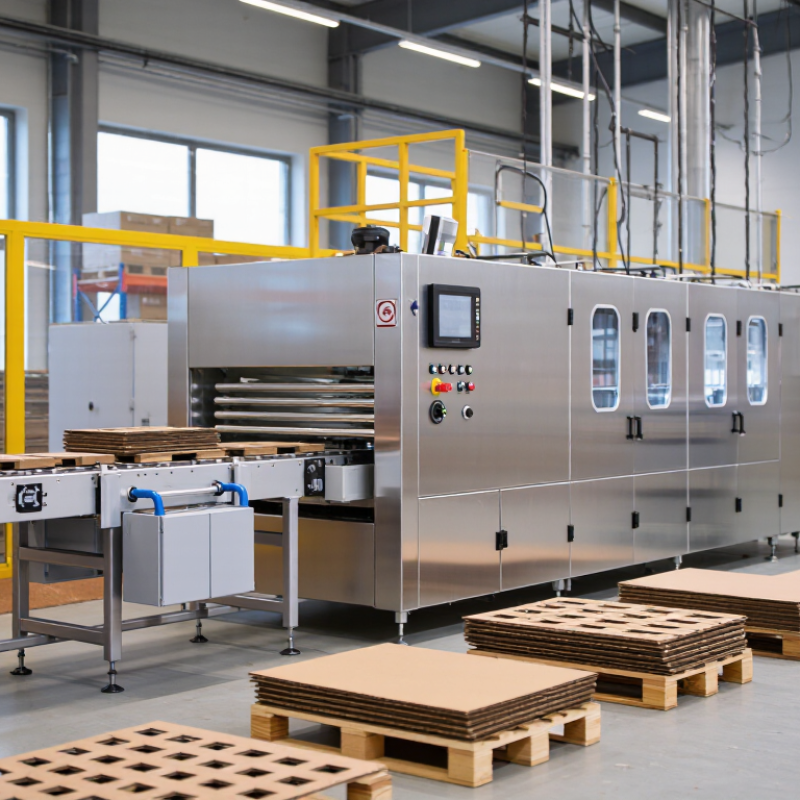
Define Your Tray Production Requirements
Define Your Tray Production Requirements
Choosing a tray machine starts with production facts, not catalogue photos. Record your daily output, tray dimensions, material thickness, sealing method, and acceptable waste rate. A small test run should include real products, because sauces, moisture, and uneven portions can change forming pressure and sealing performance. Measure the actual cycle time. Guesswork becomes expensive quickly.
FAO’s The State of Food and Agriculture 2019 estimates that 14% of food is lost between harvest and wholesale. Weak trays, poor seals, or excessive handling can increase that risk. Your machine should therefore match the product’s weight, temperature, and distribution conditions. For fresh meals, check seal consistency at the corners. For heavier contents, inspect flange strength after stacking. The details matter.
Eurostat reported 186.5 kilograms of packaging waste per person in the European Union in 2022. This figure supports careful material planning, but lightweighting is not always better. A thinner tray may reduce material use yet create more rejects. Ask suppliers for measured data on output, energy use, changeover time, and compressed-air demand. Also calculate cleaning time between products. I have seen impressive line speeds lose value during frequent format changes. That part is easy to overlook.
| Requirement | Typical Planning Range | Lower-Volume Production | Medium-Volume Production | High-Volume Production | Why It Matters |
|---|---|---|---|---|---|
| Tray material | Paper pulp, coated paperboard, PET, PP, PS, or other approved materials | Use one primary material and a limited number of specifications | Use several grades, thicknesses, or surface finishes | Use a standardized material program for continuous production | Material type determines the forming process, heating system, tooling, waste handling, and machine compatibility. |
| Target output | About 500 to 12,000 trays per hour, depending on tray size, cavity count, cycle time, and process | 500–2,000 trays/hour | 2,000–6,000 trays/hour | 6,000–12,000+ trays/hour | Required output is the main factor when selecting machine capacity, number of cavities, automation level, and line speed. |
| Operating hours | Single shift: 8 hours; extended production: 16–24 hours per day | Up to 8 hours per day | 8–16 hours per day | 16–24 hours per day | Longer operating schedules require stronger automation, cooling, lubrication, monitoring, and maintenance planning. |
| Annual production volume | Calculated from saleable output, working days, operating hours, and expected utilization | Up to approximately 3 million trays per year | Approximately 3–15 million trays per year | More than approximately 15 million trays per year | Annual demand helps prevent both under-sizing and unnecessary investment in excess capacity. |
| Tray dimensions | Common food and packaging formats range from small compartments to large rectangular trays | One or two standard sizes | Several sizes using interchangeable molds | Multiple sizes with planned quick-change tooling | Maximum tray length, width, depth, draft angle, and rim design must fit the forming area and mold system. |
| Tray depth | Shallow trays are generally easier to form; deeper trays require additional material control and forming capability | Mostly shallow trays up to about 30 mm deep | Mixed shallow and medium-depth trays of about 30–60 mm | Regular production of deeper or complex trays above about 60 mm | Depth affects draw ratio, heating balance, plug assistance, vacuum demand, and cycle time. |
| Number of tray designs | One mold may contain one or multiple cavities, depending on product size and machine layout | 1–3 designs | 4–10 designs | More than 10 designs | A larger product range increases mold storage, changeover time, quality-control requirements, and spare-parts needs. |
| Changeover frequency | Typically ranges from several times per week to several times per shift | Less than once per day | Once per shift or several times per day | Frequent changes requiring standardized quick-change procedures | Frequent changeovers make mold access, recipe storage, tool weight, and setup time important selection criteria. |
| Automation level | Manual loading, semi-automatic handling, or fully integrated automatic production | Semi-automatic loading and trimming | Automatic forming with assisted stacking and trimming | Integrated forming, trimming, stacking, inspection, and conveying | Automation reduces labor dependence and improves consistency but increases capital cost and integration requirements. |
| Acceptable scrap rate | Production targets should include edge trim, startup waste, rejects, and process losses | Up to about 5% may be manageable during startup | Target approximately 2–5% with stable operation | Target approximately 1–3% through process control and material recovery | Scrap directly affects material cost, saleable output, sustainability performance, and return on investment. |
| Electrical supply | Confirm voltage, frequency, phase, installed load, and local electrical regulations | Often suitable for smaller three-phase installations | Requires a dedicated industrial electrical supply | May require higher-capacity transformers, distribution equipment, and power monitoring | Heating elements, motors, pumps, controls, and auxiliary equipment determine the total connected load. |
| Compressed air | Many automated forming and handling systems require clean, dry compressed air | Lower air consumption with basic automation | Medium air demand for forming, cutting, and handling | High and continuous air demand; use an appropriately sized compressor and dryer | Insufficient air pressure, flow, or quality can cause incomplete forming, poor cutting, and unstable automation. |
| Cooling requirements | Air cooling or a recirculating water chiller may be used, depending on process and cycle time | Air cooling or a small recirculating system | Dedicated cooling circuit for stable cycle control | Industrial chiller, filtration, temperature control, and water treatment as required | Consistent cooling helps maintain tray dimensions, stacking quality, cycle time, and mold life. |
| Floor space | Allow room for the machine, material storage, mold handling, operator access, utilities, and finished goods | Approximately 30–80 m² for a compact setup | Approximately 80–200 m² for a production cell | More than 200 m² for an integrated line and logistics area | The machine footprint alone does not include safe access, maintenance clearance, conveyors, utilities, or inventory space. |
| Quality requirements | Check dimensions, wall thickness, weight, sealability, appearance, nesting, and food-contact compliance where applicable | Manual sampling and basic dimensional checks | Documented in-process inspection and batch records | Automated inspection, statistical process control, and traceability | Quality requirements determine the need for sensors, vision systems, testing equipment, and production data collection. |
| Labor availability | Consider operators, mold-change personnel, maintenance technicians, and quality staff | 1–3 operators per shift, depending on layout | 2–5 operators per shift, including material and quality tasks | Dedicated production, maintenance, quality, and logistics coverage | Machine selection should match the skills available for setup, troubleshooting, preventive maintenance, and quality control. |
| Future expansion | Plan for additional molds, higher cavity counts, auxiliary equipment, or a second production line | Modular tooling and spare utility capacity | Expandable automation and additional mold positions | Line integration, data connectivity, and planned capacity expansion | Buying for realistic future demand can reduce replacement costs without paying for unused capacity today. |
| Recommended selection focus | Match machine capability to the most demanding tray specification, not only the average product | Low investment, simple operation, flexible tooling | Balanced output, changeover speed, and labor efficiency | High uptime, automated handling, process monitoring, and service support | The best machine is the one that meets required output and quality at an acceptable total cost of ownership. |
Planning note: Actual capacity depends on tray geometry, material, mold cavity count, cycle time, heating and cooling performance, operator efficiency, and the required quality standard. Confirm final figures through machine trials and a site utility assessment.
Related Posts
-
What is a Tray Machine and How Does It Work?
-
2026 How to Choose the Best Tray Machine for Your Needs?
-
Why Choose a Wrapping Machine for Your Packaging Needs?
-
Top 10 Tray Sealer Packaging Machines for Global Buyers?
-
10 Essential Tips for Operating a Roll Stock Machine Effectively?
-
10 Essential Tips for Choosing the Right Wrapping Machine

Products
Links
© Copyright 2025 | All Rights Reserved