How to Choose QR Code Packaging Bags in 2026?
In 2026, a QR code on a packaging bag can connect a product with clear instructions, batch details, or a brand’s digital content. But the code is only useful when people can scan it easily. A small symbol on a glossy, creased pouch may look sharp on screen and fail under store lighting. That detail is easy to overlook.
Choosing a Qr Code Packaging Bag means assessing the bag and the code together. Start with the packaging material, surface finish, print area, and expected handling conditions. Then check the code’s size, contrast, and quiet space around its edges. Test printed samples on several phones, from different distances and angles, before approving a large production run. Real samples matter.
Also decide whether a static or editable QR destination suits your needs. An editable destination can make later updates easier, but it may depend on an ongoing service and careful account management. Confirm that the landing page loads quickly, works on mobile, and gives customers a useful next step. A code alone does not build trust.
This guide explains the practical trade-offs behind choosing QR code packaging bags, from print compatibility to placement and testing. It also considers what can go wrong: a design may pass a quick office scan yet struggle on a curved, folded bag. No checklist replaces a production proof. Use the recommendations as a starting point, then validate them with your printer and actual packaging before launch.
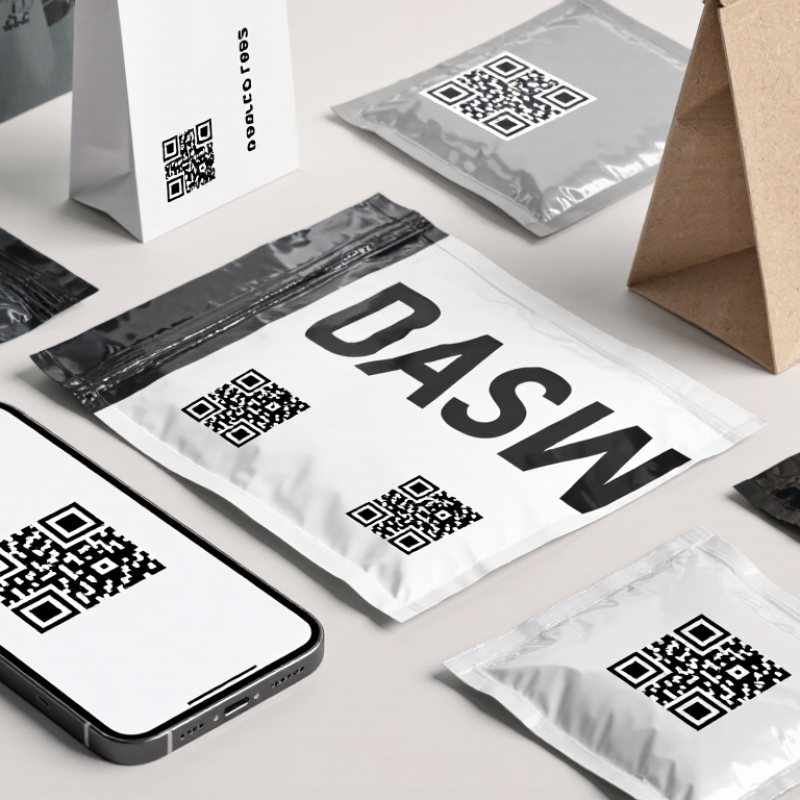
Define the Product, User, and Packaging Requirements
Start with the product, not the QR artwork. A roasted-coffee pouch may need an aroma barrier, while a frozen-food bag must tolerate moisture and cold. Map the fill weight, shelf life, sealing method, storage conditions, and likely handling before choosing film or dimensions. Then define the user: a shopper scanning under bright store lights, or a warehouse worker using a handheld scanner. Specify what the scan should deliver, such as ingredients, preparation guidance, or recycling instructions. Smithers’ The Future of Global Packaging to 2028 forecast the global packaging market would reach about US$1.3 trillion by 2028. At that scale, clear specifications and repeatable print quality matter.
Choose a scan area that stays flat after filling; avoid folds, gussets, seals, and glossy glare. GS1’s Sunrise 2027 guidance encourages retail readiness for 2D barcodes at checkout, so confirm whether your code must work for both shoppers and point-of-sale scanners. Print contrast, quiet zones, code size, and the landing page all need testing on the finished bag, not just a screen proof. Small details matter. Test it early. Scan samples when the pouch is empty, full, and slightly creased. A first mock-up can look perfect, then fail once the bag bulges. That is easy to miss. Record the material, code placement, and scan results, then revise the specification before ordering production quantities.
How to Choose QR Code Packaging Bags in 2026: Define the Product, User, and Packaging Requirements
QR Code features are measured in modules, the small squares that form the code. Keep a clear quiet zone of at least four modules on every side, and avoid placing folds, seals, or product graphics across the symbol. Test the printed code on the finished bag with the intended scanning device and under realistic lighting. Structural dimensions are based on ISO/IEC 18004.
Compare Bag Materials, Sizes, Closures, and Barrier Properties
How to Choose QR Code Packaging Bags in 2026?
Choose a bag material around the product’s needs, not just its appearance. Paper feels natural but may need a lining to resist moisture or grease. Plastic films can offer stronger barriers, while paper-film laminates balance printability and protection. No material is perfect. A QR code printed across a fold can become difficult to scan, so keep it on a smooth, flat panel. Matte surfaces often reduce glare, though they still need a clear, high-contrast code.
Match bag size to the product and the code. A tiny pouch leaves little room for a scannable QR code, while an oversized bag can waste material and shift during filling. Consider resealable zippers for repeated use, heat seals for a firm closure, or tear notches for quick opening. Barrier needs depend on what goes inside: moisture-sensitive contents may need a stronger moisture barrier, while some products require protection from oxygen or light. Check supplier specifications and test filled bags under realistic storage conditions.
Tips: Print a test QR code at its intended size. Scan it under kitchen lighting, at different angles, and after handling the bag. Leave clear space around the code. One detail is easy to overlook: condensation or a curved pouch can disrupt scanning, even when the print looks sharp. A small trial run can reveal that before a full order.
Choose QR Code Features, Destinations, and Data Standards
How to Choose QR Code Packaging Bags in 2026?
Choose QR Code Features, Destinations, and Data Standards
A QR code on a pouch should do more than open a homepage. Choose a destination that answers a real shopper question: ingredients, recycling guidance, product instructions, or batch-specific details. Keep the first screen readable on a phone, with large buttons and minimal scrolling. Test it under shop lighting and with a slightly creased bag. Small details matter.
Juniper Research’s 2021 report forecast that QR-code payment users would reach 2.2 billion worldwide by 2025. That forecast concerns payments, not packaging, but it signals growing familiarity with scanning. For product identification, use GS1 standards where applicable. GS1 Digital Link can connect a product identifier to online information, while preserving a structured data path. GS1’s Sunrise 2027 initiative encourages retailers to prepare systems to read two-dimensional barcodes at checkout. Check that the printed code remains clear at the final bag size, and verify contrast, quiet space, and scan performance on actual material—not just a screen proof. The destination may change; the printed code should not become a dead end. Still, teams sometimes add too many links. A simpler scan path is often easier to maintain.
Check Print Quality, Readability, Sustainability, and Compliance
Choosing QR code packaging bags in 2026 starts with print quality. Ask for a production sample, not just a digital proof. Inspect the code’s edges for blur, ink spread, and gaps. Keep strong contrast between the code and its background, with clear space around the square. Small details matter. Scan several bags under store lighting, from different angles, and with more than one phone. A code that works on a desk may fail on a curved, glossy bag. Test in real light. Check that the destination page loads quickly and remains useful over time; changing a link after printing can create avoidable trouble.
Readability also depends on the bag itself. Wrinkles, seams, and folds can cross the code, so place it on a flat area that stays visible when the bag is filled. For sustainability, compare the full material structure, inks, and local recycling options rather than relying on a broad “eco-friendly” claim. A recyclable film is not automatically accepted everywhere. That distinction is easy to overlook. Finally, review the printed claims and linked information against applicable packaging and labeling requirements in each sales market. A QR code should support required on-pack information, not quietly replace it. Keep a record of the approved artwork, material details, scan tests, and compliance review. It feels fussy, but it helps catch small errors before a full print run.
Test Samples and Evaluate Suppliers Before Ordering
How to Choose QR Code Packaging Bags in 2026?
Test Samples and Evaluate Suppliers Before Ordering
A printed sample can reveal problems that a screen preview cannot. Scan the QR code on the actual bag, not just a flat proof. Try several phones under bright light and dim indoor lighting. Check the code after bending the bag around a filled product. Glossy film, wrinkles, and dark backgrounds can all affect scanning. Note the code size and its position, too. A code near a side seal may distort when the bag is filled.
Test the sample through normal handling. Rub the printed area with a clean, dry cloth, then inspect it for fading or smearing. Fill the bag and check the seals for gaps. Ask suppliers how they control print alignment, material thickness, and repeat orders. Request written specifications and a sample from the proposed production material. Compare responses, not just prices. One sample can flatter a supplier’s work; it may not predict every production run. That deserves a second check.
Tips: Keep a simple test log with scan results, photos, and seal observations. Ask for a revised sample if anything fails. Small delays now are better than a large batch of unusable bags.