2026 How to Choose the Best Tray Machine for Your Needs?
In today's fast-paced production environment, selecting the right tray machine is crucial. According to industry reports, the global market for tray machines is projected to reach $1.2 billion by 2026, growing at a CAGR of 5.6%. This growth highlights the increasing demand for efficient packaging solutions. Companies need machines that can adapt to various products and packaging types.
The performance of a tray machine greatly affects production efficiency and quality. Properly evaluating your needs is essential. A mismatch can lead to increased costs and wasted resources. Many businesses overlook the specifics that matter, such as tray size, material compatibility, and speed of operation. Investing in the wrong machine might result in operational setbacks.
Understanding how to choose the right tray machine is not a straightforward task. Each business has unique requirements and constraints. Engaging with industry professionals and utilizing data can guide decision-making. However, even with the best information, some choices may not yield expected results. The process requires careful thought and ongoing assessment.
Understanding Your Specific Tray Production Requirements
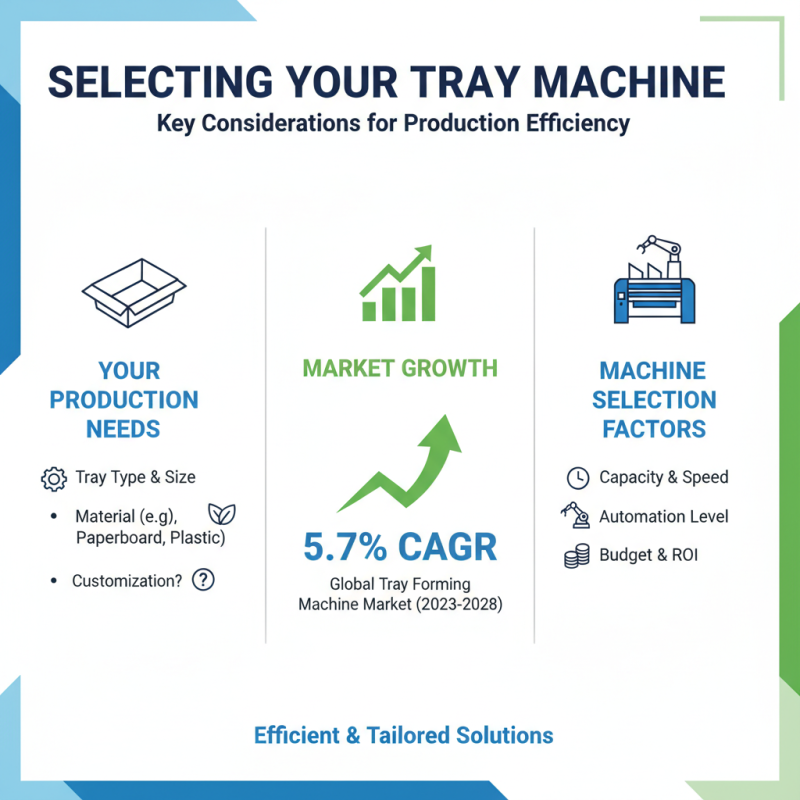
Understanding your specific tray production requirements is crucial in selecting the best tray machine for your needs. Industry reports indicate that the global tray forming machine market is projected to grow at a CAGR of 5.7% between 2023 and 2028. This growth highlights the increasing demand for efficient and tailored production solutions.
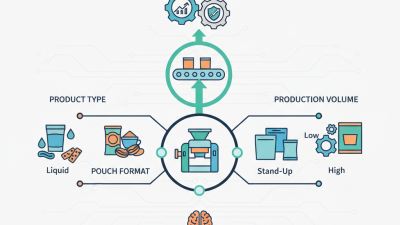
To begin, assess the type of trays you need. Different applications may require unique specifications. For instance, food-grade trays must comply with stricter regulations than those for industrial uses. Consider the materials you intend to work with. Some machines are better suited for plastic, while others excel with paperboard. A mismatch could lead to inefficiency in production.
Moreover, think about your production volume. If you only need a few hundred trays per day, it may not make sense to invest in high-capacity machinery. Research shows that mid-range machines can reduce costs while still meeting production needs. Be willing to reflect on your long-term goals. A machine that fits today’s requirements may not suit future growth. Evaluate not just immediate needs but also scalability for potential increases in demand.
Assessing the Capacity and Size of the Tray Machine
When selecting a tray machine, assessing its capacity and size is crucial. The right size depends on your production needs. For small operations, a machine with a capacity of 500 to 1,000 trays per hour may suffice. Larger operations often require machines capable of processing 2,000 trays or more. Industry reports suggest that 70% of businesses underestimate the space needed for these machines. This leads to operational delays.
Tips: Measure your workspace carefully. Consider not just the machine size, but also clearance for maintenance. A compact machine can save floor space, but it might limit production. Evaluate your projected growth. Will your demand increase over time? If so, opt for a machine with scalable options.
Think about the types of trays you'll handle. Different designs may require varying capacities. Sometimes, a machine that seems perfect on paper proves to be a poor fit in practice. It's important to conduct trials with sample trays. Gathering detailed specifications from manufacturers can help, yet many overlook this step. The right information can prevent costly mistakes.
Assessing the Capacity and Size of the Tray Machine
Exploring Different Types of Tray Machines Available
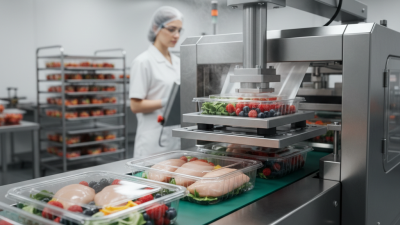
When exploring tray machines, it’s essential to know the different types available in the market. Automatic tray sealing machines are popular for their efficiency. They can seal large quantities in a short time. Reports indicate that such machines can enhance productivity by up to 30%. This makes them ideal for high-volume production lines.
Another type is manual tray packing machines. These are economical for small businesses. They require more labor but are simpler to operate. According to industry studies, manual machines can be a cost-effective solution for startups. However, they can be time-consuming. Depending on the workload, businesses must consider trade-offs.
Thermoforming machines present an innovative option. They create custom trays directly from plastic sheets. This flexibility can reduce material waste significantly. Some manufacturers report a decrease in waste by 20% when using thermoforming technology. Yet, these machines come with higher upfront costs. Businesses should assess their long-term needs before investing. Each type of tray machine has distinct advantages. Understanding your specific requirements will help you choose wisely.
2026 How to Choose the Best Tray Machine for Your Needs? - Exploring Different Types of Tray Machines Available
| Type of Tray Machine |
Features |
Applications |
Price Range |
Maintenance Level |
| Semi-Automatic Tray Machine |
Easy operation, moderate speed |
Food packaging, small production runs |
$5,000 - $10,000 |
Low |
| Fully Automatic Tray Machine |
High speed, fully automated |
Mass production, industrial use |
$15,000 - $50,000 |
Moderate to High |
| Manual Tray Machine |
Cost-effective, requires manual input |
Small businesses, low volume |
$1,000 - $3,000 |
Very Low |
| Tray Sealing Machine |
Seals trays tightly, preserves freshness |
Food service, retail packaging |
$6,000 - $20,000 |
Low |
Evaluating Key Features and Technologies in Tray Machines
When choosing a tray machine, key features can greatly affect your decision. Start by examining the type of trays you need. Some machines focus on specific sizes and styles, while others offer more versatility. Pay attention to the machine's capacity and how it suits your production volume. An overly complex system may become a burden instead of a benefit.
Technologies in tray machines are also critical. Automated functions can save time, but they may increase maintenance needs. Look for user-friendly interfaces that simplify operation. A blend of technology and usability is essential for efficiency. Sometimes, too many features can complicate basic tasks. Striking the right balance is not always easy.
Consider the materials and build quality of the machine. Cheaper options may seem appealing but can lead to costly repairs. Conduct thorough research on durability and performance. Reflecting on your needs and budget will guide you better. Each feature adds complexity, so prioritize what truly matters for your workflow.
Considering Budget and Maintenance Factors for Your Choice
When selecting a tray machine, budget and maintenance are crucial factors. According to industry reports, approximately 30% of businesses underestimate their long-term expenses. A lower initial cost can lead to higher maintenance bills down the line. It's essential to evaluate machines not just on upfront prices but also on how they perform over time.
Maintenance often gets overlooked. Many machines require regular servicing, which can be costly. A study from a leading machinery research firm found that over 40% of users encountered unexpected repair costs. Choosing a machine with readily available parts can save time and money. Consider consulting with current users about their maintenance experiences. Their insights can lead to better decision-making.
Don’t forget the size and output capacity of the machine. A compact model may fit your space but might not meet production needs. Industry statistics indicate that nearly 25% of businesses regret their size choice after a year. Reflect on your growth and production goals. Balancing budget constraints and maintenance needs is vital for achieving operational efficiency.