Best Print Inspection Techniques to Ensure Quality Control?
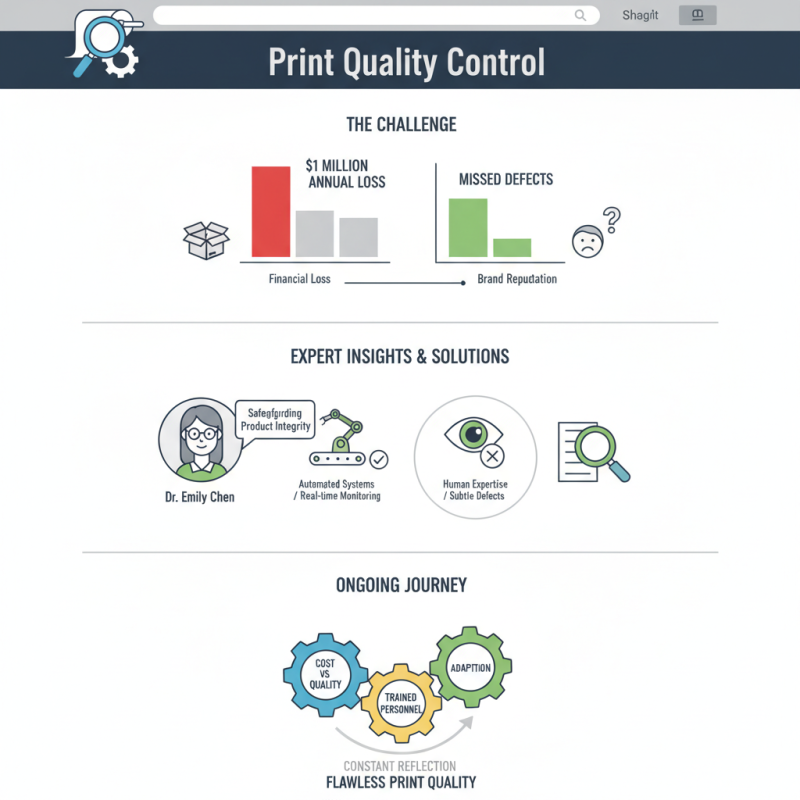
In the fast-paced world of printing, ensuring quality control through effective Print Inspection techniques is crucial. According to a recent industry report by Smithers Pira, missed defects in packaging can lead to significant financial loss, with companies potentially losing up to $1 million annually due to quality failures. This staggering data highlights the need for robust inspection methods.
Expert in the field, Dr. Emily Chen, emphasizes, "Proper Print Inspection is vital for safeguarding product integrity and brand reputation." Her insights reflect the growing demand for advanced inspection technologies. Automated systems now offer real-time monitoring, which reduces human error. However, reliance on technology alone can lead to oversights in more subtle defects.
Despite the advances in Print Inspection, some challenges remain. Many companies still struggle to balance inspection costs with the benefits of quality assurance. A lack of trained personnel can also hinder the adoption of sophisticated techniques. The reality is, achieving flawless print quality is an ongoing journey that requires constant reflection and adaptation.
Overview of Print Inspection Techniques in Quality Control
In the realm of print production, ensuring quality control is crucial. Adopting effective print inspection techniques can significantly enhance product reliability. According to a recent industry report, over 30% of production errors stem from inadequate inspection methods. Organizations must focus on the right strategies to address this issue.
Automated inspection systems offer precision. They reduce human error and
improve output consistency. However, reliance on technology can lead to oversight. It is important to regularly evaluate these systems.
Regular updates are crucial. Increases in print speeds can outpace inspection capabilities. This discrepancy can result in missed defects.
Tips: Implement bi-weekly audits to assess inspection accuracy. Engage staff in training on the latest technologies. A well-informed team can better detect quality issues.
Using a combination of
Fourier Transform Infrared (FTIR) spectroscopy and vision systems is another recommended method. This combination enhances defect detection. Nonetheless, integrating various inspection methods can complicate workflows. Coordination among different systems is essential. Misalignment may cause confusion in quality assessments.
Tips: Simplify processes where possible. Streamline communication between teams to ensure clarity. Always seek feedback on the inspection process.
Improvement is a continuous journey. Importance of Print Quality Control in Manufacturing Processes
In manufacturing, print quality control plays a crucial role. High-quality prints can enhance brand reputation and customer satisfaction. Data from industry reports suggest that up to 20% of prints may have defects if not controlled properly. This can lead to significant financial losses. Companies must focus on consistent quality to maintain competitive advantage.
Implementing effective print inspection techniques can reduce the likelihood of defects. Regular quality checks during production are vital. It ensures that any deviations from the standard are caught early. In fact, studies show that 70% of quality issues can be identified through visual inspections. However, relying solely on manual checks is not enough. Automation of certain inspection processes can significantly boost accuracy and consistency.
Tips: Consider investing in advanced imaging technology. It can detect flaws that are invisible to the naked eye. Additionally, training staff on the importance of print quality can enhance their skills. Encouraging a culture of quality awareness is key. Reflection on past mistakes can also lead to improvements. Remember, even minor defects can impact overall quality. Prioritizing print inspection is essential for success.
Key Technologies for Effective Print Inspection
Print inspection plays a crucial role in maintaining quality control. Various technologies are available to ensure printing meets the required standards. Automated visual inspection systems use high-resolution cameras to detect defects. These systems operate swiftly, scanning large volumes with precision. Yet, they sometimes miss subtle flaws. Regular calibration is essential to enhance accuracy.
Another key technology is spectral analysis. This technique examines color consistency across prints. It captures color variations that humans might overlook. However, spectral analysis requires skilled operators. Training is vital to interpret results correctly. Without proper knowledge, mistakes can happen, leading to missed issues.
Inks and substrates also impact print quality. The choice of materials can affect adhesion and durability. Testing these elements before production is necessary. Yet, testing can be time-consuming and might disrupt workflow. Finding a balance between thorough testing and efficiency is a common challenge for many operations.
Comparative Analysis of Print Inspection Methods
In the printing industry, maintaining high quality is essential. Various print inspection methods exist, each with unique strengths and weaknesses. Manual inspection allows operators to spot obvious flaws. However, it can be subjective and inconsistent. Human error remains a significant factor, leading to missed defects.
On the other hand, automated systems use advanced technology to detect issues like color inconsistencies and alignment problems. These systems can analyze large volumes of print quickly. Yet, they may struggle with complex defects that require human judgement. It's also crucial to regularly calibrate these machines. Failure to do so can result in inaccurate readings.
Another technique is spectral analysis. It measures color accuracy and consistency. This method is precise but requires significant investment and expertise. Not all printing facilities can afford such tools. Many smaller operations may overlook this option, missing out on improved quality control. Ultimately, each method has its merits and pitfalls that need to be carefully considered. Balancing technology and human insight is a continuous challenge.
Future Trends in Print Inspection for Quality Assurance
As technology evolves, print inspection techniques are becoming more advanced. Automation and AI are key players in this transformation. They enhance precision and speed in detecting defects. For example, machine learning algorithms can analyze vast amounts of data. They can identify patterns that may escape human eyes. This allows teams to focus on critical quality control issues.
Another trend is the integration of real-time monitoring. With sensors and cameras, quality checks happen on the production line. This offers immediate feedback. If an error is detected, adjustments can be made promptly. However, the reliance on technology raises questions. What happens when systems fail? The human touch is still necessary for nuanced judgments.
Sustainability is also gaining traction in print inspection. Eco-friendly materials are becoming more prevalent. This trend pushes for inspection methods that minimize waste. Automated systems can help here too. Yet, there are challenges in balancing resource use and inspection accuracy. As industries adapt, they must consider both quality and sustainability comprehensively.
Best Print Inspection Techniques to Ensure Quality Control